review
Outcomes of the forum events

Switzerland has debated the antibiotic resistance crisis and the role of phage therapy: these are the results
Summary
Strong interest in a highly relevant health topic. The four forums attracted keen interest, with a total of around 500 people participating, including panellists as well as participants with a professional or personal connection to the topic and interested ‘laypeople’. The high turnout underlines the relevance of hard-to-treat bacterial infections, which also pose a significant problem in Switzerland and place a heavy burden on those affected.
There is a need for phage treatments, but very few are currently being administred. The current guideline permits such treatments. However, there is still some uncertainty even amongst experts. Further hurdles include the considerable effort involved and issues surrounding cost coverage. According to Swissmedic, easier access, as seen in other countries, is not possible under current legislation. Some experts and politicians are calling for the possibility of easier access to be examined.
Personalised treatments cost low-five-figure sums in Switzerland. However, estimates from Australia show that phage therapy can lead to overall cost savings.
According to Swissmedic, the ‘Good Manufacturing Practice’ standard is mandatory for the production of phage preparations. This is up to a hundred times more expensive than high-quality production without GMP. Some experts consider personalised phage treatments with GMP-requirements to be hardly realistic. The Centre hospitalier universitaire vaudoise (CHUV) has a GMP-certified phage production facility. However, a request from the Hôpitaux universitaires de Genève to produce a specific phage preparation has not yet been met.
Clinical trials are needed to demonstrate the efficacy and safety of phage therapy. These are virtually unaffordable for start-ups and university institutes. Swissmedic is open to flexible trial designs and other requirements to facilitate such studies.
Experts and politicians are urgently proposing measures:
-
- Improved collaboration between all stakeholders, national coordination
- Involvement of actors who have so far remained on the sidelines (e.g. the Federal Office of Public Health)
- Establishment/strengthening of centres of excellence, including GMP production and a central register for chronic infections and phage treatments
- Securing funding for research, infrastructure and clinical trials (with federal government involvement)
- Nationally coordinated implementation of a clinical trial
- Information and awareness-raising
How the forums were analysed
- Between January and May 2026, four phage forums were held in Basel, Lenzburg, Zürich und Lausanne statt.
- The event in Lenzburg was streamed live and is available online (in German).
- Each forum began with the film ‘Phage therapy – medicine goes viral’, followed by 2.5–3 hours of discussion (expert panel and audience)
- Participants were surveyed on several occasions during the discussion. A total of 332 people took part in the survey; the number of responses declined slightly as the events progressed.
- The discussions were video-recorded, automatically transcribed and manually analysed (without AI). The results are grouped below into nine thematic areas. (The term ‘experts’ is used to refer to the panellists.)
Profile of participants


Composition of the panels
Medical professionals (* working on phage therapy)
PD Dr Lucas Boeck (Universitätsspital Basel), Forum Basel
Prof. Dr Silvio Brugger (Universitätsspital Zürich), Forum Lenzburg
Prof. Dr Barbara Hasse (Universitätsspital Zürich), Forum Zürich
* Prof. Dr Thomas Kessler (Universitätsklinik Balgrist, Zürich), Forum Lenzburg
* Dr Angela Koutsokera (Centre hospitalier universitaire vaudois, Lausanne), Forum Lausanne
* PD Dr Lorenz Leitner (Universitätsklinik Balgrist, Zürich), Foren Basel und Zürich
* Prof. Dr Christian Van Delden (Hôpitaux universitaires de Genève), Forum Lausanne
Phage researchers (* specialising in phage therapy)
Prof. Dr Alexander Harms (ETH Zürich), Foren Basel, Lenzburg und Zürich
* Dr Jean-Paul Pirnay (Militair Hospitaal Koningin Astrid, Brüssel), Forum Zürich
* Dr Gregory Resch (Centre hospitalier universitaire vaudois), Forum Lausanne
Medical lawyers and ethicists
Prof. Dr Stéphanie Dagron (Université de Genève), Forum Lausanne
Prof. Dr Nils Schaks (Universität Basel), Foren Basel und Lenzburg
Prof. Dr Brigitte Tag (Universität Zürich), Forum Zürich
Regulation
Dr Julia Djonova (Swissmedic), Foren Basel, Lenzburg und Zürich
Dr Michel Hauser (Swissmedic) Forum Lausanne
Industry
Dr Baptiste Bourgine (Precise Health, Sion), Forum Lausanne
Patient representatives
Reto Weibel (Cystische Fibrose Schweiz), Foren Basel, Lenzburg, Zürich und Lausanne
Policy makers
Nationalrat Christian Lohr (Die Mitte, TG, Mitglied SGK-N), Forum Basel
Altnationalrat Dr. Michel Matter (GLP, GE), Forum Lausanne
Nationalrätin Farah Rumy (SP, SO, 2. Vizepräsidentin NR), Forum Lenzburg
Nationalrätin Gabriela Suter (SP, AG), Forum Zürich
Forum Phagentherapie
Dr Thomas Häusler, Forum Lausanne
Moderator
Dr Katharina Bochsler, Foren Basel, Lenzburg, Zürich
Stéphane Gabioud (RTS), Forum Lausanne
Detailed results of the discussions
1. Bacterial infections that are difficult to treat are a significant problem in Switzerland
Experts and medical professionals in the audience confirmed that they treat many patients with chronic bacterial infections where antibiotics fail, for example due to resistance. They also receive many enquiries from those affected. Numerous patients bear a considerable burden of disease – often for years. Those affected in the audience reported infections that had, in some cases, lasted for many years. Prof. Dr Alexander Harms (ETH Zurich and Forum Phagentherapie) pointed out that the scale of the problem is likely to be underestimated by both the public and experts, as it involves a wide variety of different infections that are not perceived as a single issue.
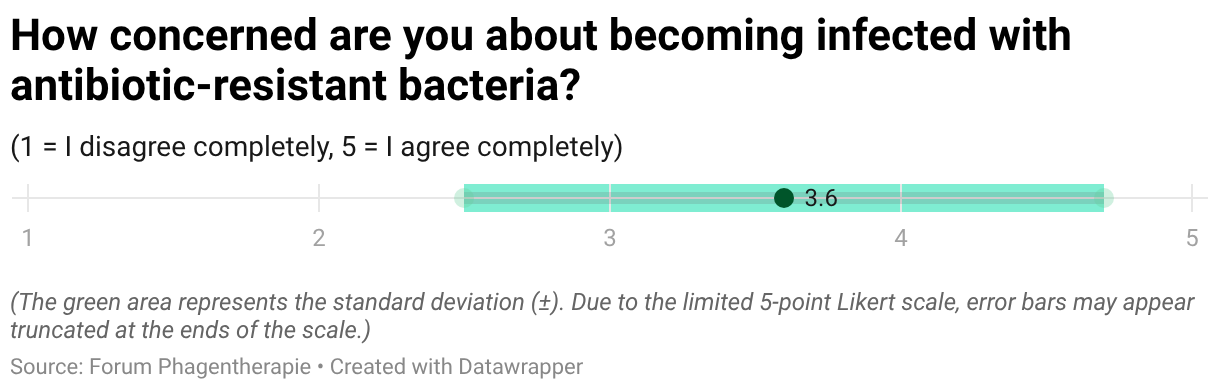
In the live surveys conducted during the four forums, participants tended to agree with the statement that they were concerned about becoming infected with antibiotic-resistant bacteria (M = 3.6).
2. There is a need for phage treatments in Switzerland
Experts, medical professionals and patients in the audience identified a need for phage treatments. This assessment is based on experience and on enquiries regarding treatment with phages.
Many experts are aware of patients who have travelled to Georgia for treatment or who wish to do so. Phage therapy is practised in Georgia. A range of phage preparations and treatments is available online. Their quality is uncertain.
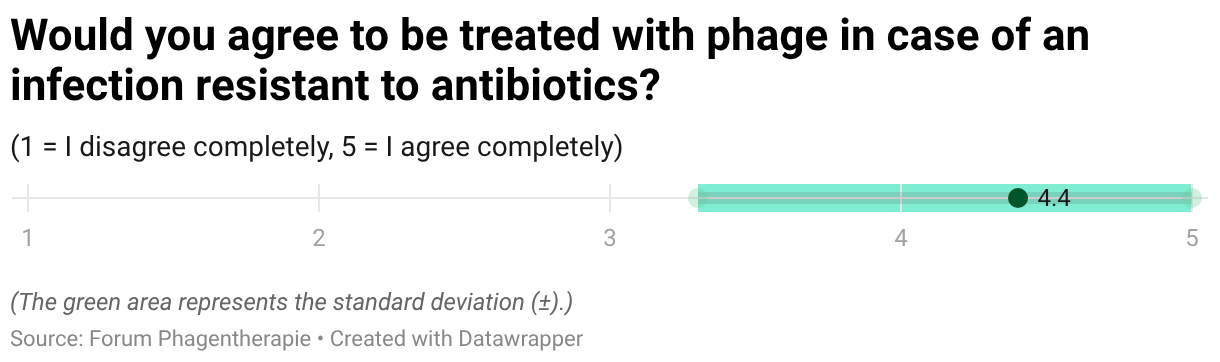
All those affected who took the floor regarded phage therapy as a treatment option. The participants in the survey agreed with this (M = 4.4).
3. Phage treatments in Switzerland
There are no phage preparations officially authorised in Switzerland for the treatment of bacterial infections in humans. Treatment is only permitted in the framework of compassionate use (individual therapeutic trial). A guideline issued by the Swiss Academies of Medical Sciences provides the framework for this. The guideline does not provide clear guidance on certain aspects, such as the maximum number of treatments a healthcare professional is permitted to carry out per year. This has led to uncertainty even amongst healthcare professionals.
Experts on the panel and in the audience offered the following assessments:
-
- It is not only patients facing death, amputation or similarly serious consequences who may be treated – as is often assumed. Chronic and difficult-to-treat infections may also be treated with phages.
- There is no set limit on the number of treatments a healthcare professional is permitted to carry out per year. Twenty treatments per year are permitted, but systematic scientific monitoring is not allowed. In cases of doubt, a query to the cantonal ethics committee can provide clarity.
- The number of phage treatments in Switzerland is very small. The uncertainties mentioned regarding the guidelines very likely play a significant role.
In addition, the following obstacles have been identified:
-
- A healthcare professional must be found who is willing to carry out a treatment (there is no register of healthcare professionals with experience of phage therapy).
- Uncertainties regarding liability.
- The healthcare professionals performing treatments must obtain a commitment to cover costs from the health insurance provider. This is a time-consuming process and takes varying lengths of time depending on the provider.
The SAMS guideline prohibits the systematic collection of data relating to a treatment. This is to prevent ‘hidden’ illegitimate clinical trials arising from a series of therapeutic attempts. From a medical and scientific perspective, however, it would make sense to monitor and document treatments as comprehensively as possible in order to learn from them. Dr Angela Koutsokera (CHUV) said that the Centre hospitalier universitaire vaudoise also maintains a phage therapy register, which has been approved by the relevant bodies at the CHUV and in the Canton of Vaud.
testimony from a person affected: reto weibel, patienten expert attending the forum
Reto Weibel suffers from cystic fibrosis (CF), a congenital condition that damages the lungs and other organs and, despite treatment, leads to chronic lung infections. These infections severely impair his quality of life, and repeated hospital admissions are common. The regular use of antibiotics leads to the bacteria in the lungs becoming resistant, gradually reducing the number of treatment options available.

At the Basel Forum, Reto Weibel had to join the event via video link from hospital due to a sudden flare-up of an infection (on the podium (from left to right): C. Lohr, L. Boeck, L. Leitner, K. Bochsler, A. Harms, J. Djonova, N. Schaks.)
Weibel had to undergo a lung transplant just over ten years ago. The transplanted lung has also become colonised by resistant bacteria. Weibel described how his quality of life has deteriorated once again, and how he is once more dependent on oxygen at altitudes above 1,000 metres. He had to join the forum in Basel via video link from hospital; a flare-up of infection had made his hospital stay necessary.
Weibel would like to be treated with one of the two antibiotics that are still effective for him, in order to improve his quality of life. His doctors have refused this, as they wish to save these medicines in case the infection threatens to get out of control. Weibel disagrees and says: ‘I’m living in the present.’ He subsequently asked for phage therapy, but this has been refused because not all approved treatment options have been exhausted (the two reserve antibiotics).
Weibel criticised this, saying that decisions were being made over his head. He argued that patients who were fully informed about the risks and prospects of success of a treatment would be able to decide for themselves. Weibel called for patients to be more closely involved – not only when it comes to their own treatment, but also in matters relating to research, the authorisation of medicines and other issues affecting them.
Reto Weibel’s case shows that, although experts say the SAMS guidelines do not prohibit treatment, it has not yet been provided. This confirms the barriers identified in the forum. One participant summed up the situation with the question: ‘If we are already allowed to opt for exit [assisted suicide], why shouldn’t patients be allowed to be treated with phages?’ National Councillor Christian Lohr also emphasised patients’ right to self-determination.
4. What is the way forward for phage therapy in Switzerland?
Some countries have facilitated access to phage therapy despite the lack of formal authorisation; the Belgian model has attracted the most attention: healthcare professionals are, in principle, permitted to treat patients with phages. The phages and preparations used must be tested in accordance with established rules and manufactured by certified laboratories. At the forum in Zurich, Dr Jean-Paul Pirnay from the Queen Astrid Military Hospital (Brussels) was part of the panel to provide first-hand information on the Belgian model and experiences with it. He played a key role in its development; the phages are produced in Pirnay’s laboratory at the military hospital. To date, over 200 patients in Belgium and abroad have been treated with these phages, including in Switzerland. According to Pirnay and a study, the results have been positive.
In Switzerland, the current legal framework does not permit the adoption of the magistral preparation used in the Belgian model (explanations of the model and the extemporaneous preparation method), said Dr Michel Hauser of Swissmedic.
Several experts pointed out that the Belgian model provides only limited data with which to assess the efficacy of phages. This requires clinical trials in which patients are treated according to a defined protocol and with a control group. Evidence of efficacy is required in order for a medicine to be granted full marketing authorisation. For this reason, Dr Lorenz Leitner, Prof. Dr Thomas Kessler (both from Balgrist University Hospital, Zurich), Dr Angela Koutsokera and Dr Gregory Resch (both from CHUV, Lausanne), who are working on phage therapy, focus primarily on clinical trials rather than individual therapeutic trials. However, they have carried out a small number of individual treatments and would continue to do so in future. Whilst individual treatment trials are important for those affected, they tie up a great deal of resources without yielding insights that can be used for future treatments.
Koutsokera und Dr. Gregory Resch (CHUV) sagten, das CHUV habe ein Programm, um individuelle Heilversuche durchzuführen, und strebe ebenfalls an, eine klinische Studie durchzuführen.
Koutsokera and Resch said that the CHUV had a programme for carrying out individualised treatment trials and was also aiming to conduct a clinical trial.
Pirnay pointed out that clinical trials were also possible under the Belgian model and were currently being carried out.
Pirnay and Prof. Christian Van Delden (Hôpitaux universitaires de Genève, HUG) consider individual therapeutic trials to be appropriate and important for patients where there is a chance of success. It will take several years for the first clinical trials to be completed – which, as a rule, would only apply to specific phages, pathogens and types of infection. Until then, those affected have no option but to rely on individualised treatments. Pirnay also emphasised that economically viable phage preparations are conceivable only for the two or three most common bacterial species, yet phages are needed to combat around 30 bacterial species.
National Councillor Gabriela Suter and Weibel also consider the Belgian model to be worth considering, and there were expressions of support from the audience, including patients, medical professionals, researchers and other participants. The other health policy-makers who took part in the forums alongside Suter are cautious on this issue. Evidence of the efficacy and safety of phages is important, they said. A critical dialogue is needed, Lohr noted, whilst National Councillor Farah Rumy said that it is the role of policy makers to establish the right framework conditions.
Auch Nationalrätin Gabriela Suter und Weibel halten das belgische Modell für bedenkenswert und aus dem Publikum gab es unterstützende Voten von Patient:innen, Medizier:innen, Forscher:innen und anderen Teilnehmer:innen. Die anderen Gesundheitspolitiker:innen, die neben Suter an den Foren teilnahmen, sind in dieser Frage zurückhaltend. Nachweise für Wirksamkeit und Sicherheit der Phagen seien wichtig. Es brauche einen kritischen Dialog, hielt Lohr fest und Nationalrätin Farah Rumy sagte, die Aufgabe der Politiker:innen sei es, die richtigen Rahmenbedingungen zu setzen.
In addition to efficacy, clinical trials also test the safety of medicines. The safety (and side effects) of phages were discussed at all of the events. Several experts noted that the data available to date indicated a good safety profile for highly purified phage preparations. Leitner mentioned two recent studies in which side effects had occurred. Pirnay and Harms countered that this was probably not due to the phages per se, but rather to (excessively) high dosages or other components of the preparations. Dr Thomas Häusler (Forum Phagentherapie) pointed out that, when weighing up the benefits against the risks, it must be borne in mind that some people suffering from untreatable infections order phages from unverified sources online to treat themselves, or seek treatment abroad – this too could pose a risk.
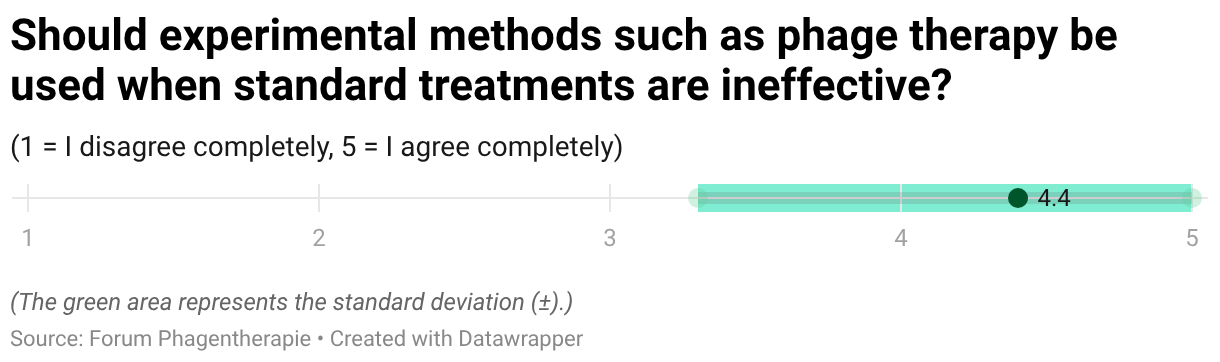
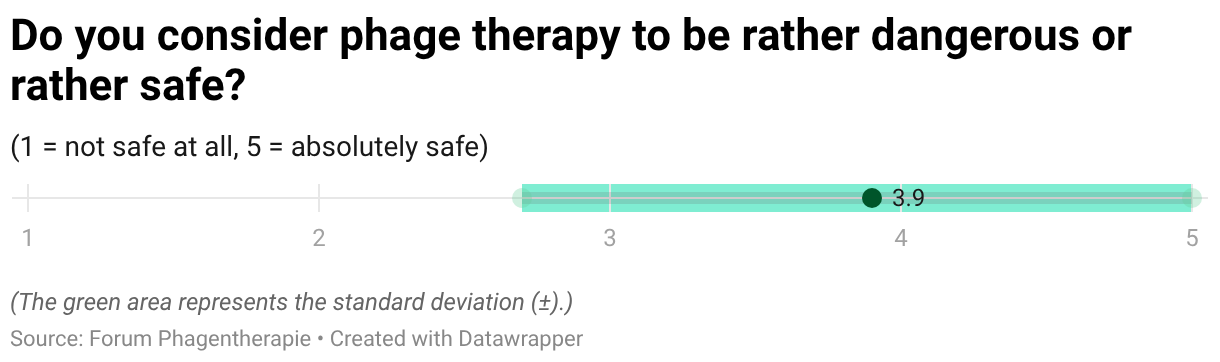
The participants almost unanimously agreed (M = 4.4) that phages should be used when other treatment methods have failed. They tended to regard the therapy as safe (M = 3.9).
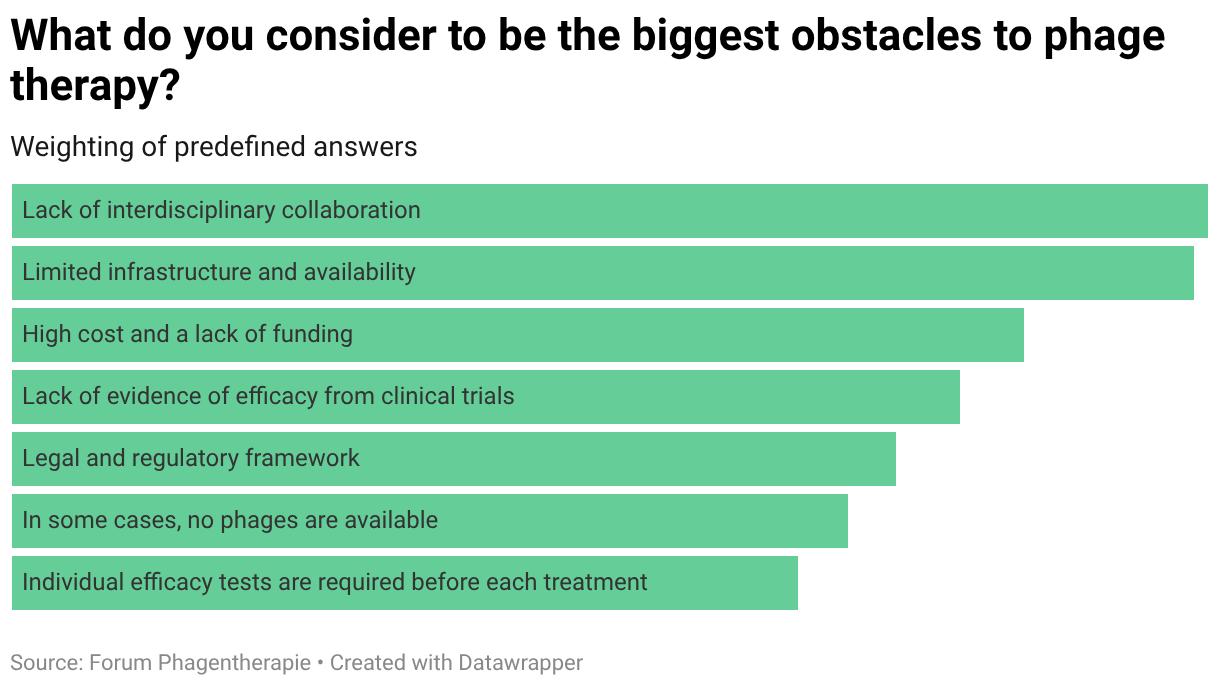
When asked to select the greatest barrier to the use of phage therapy from seven given options, the participants chose a lack of interdisciplinary collaboration, followed by a lack of infrastructure, high costs and a lack of funding.
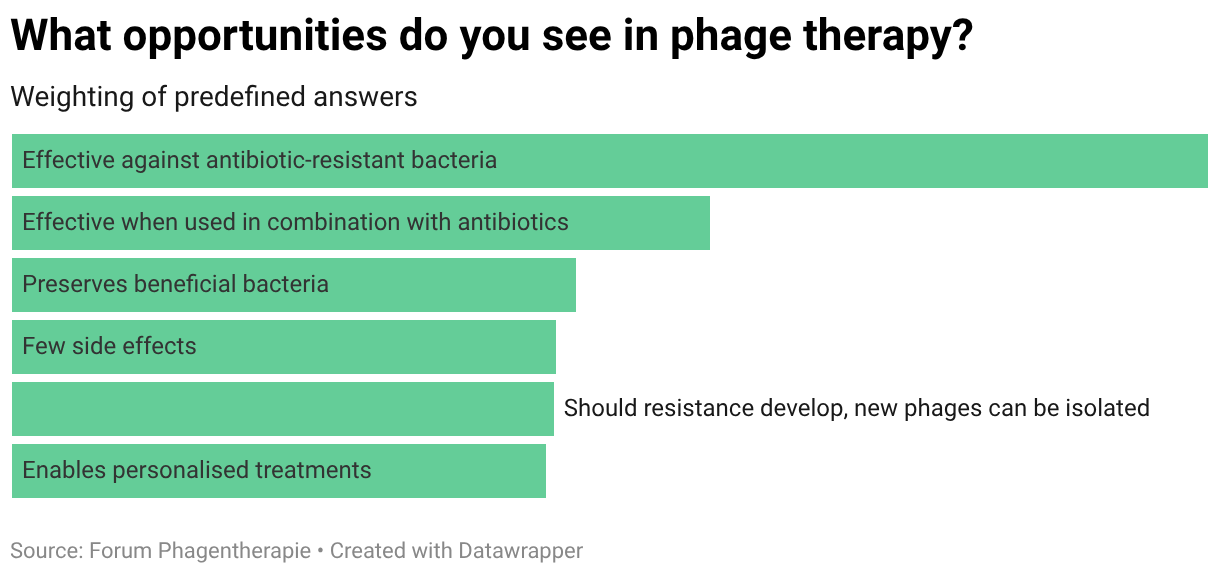
By far the greatest opportunity associated with phage therapy, as identified by the participants, is that it is also effective against antibiotic-resistant bacteria.
5. Clinical trials
Clinical trials cost tens to hundreds of millions – a figure that is virtually unaffordable for academic research institutions and start-ups driving phage therapy research. Swissmedic experts Dr Julia Djonova and Hauser emphasised the regulatory authority’s considerable flexibility when it comes to trial design – which can have a major impact on costs. So-called randomised double-blind trials involving several hundred or thousand participants are the norm. However, this is not mandatory in the case of phages; there is no need for an extremely complex trial. Swissmedic takes a risk-based approach and is open to discussions about innovative designs for such trials. Djonova and Hauser called for cooperation among all stakeholders to get a clinical trial off the ground.
Djonova cited the example of the authorisation of a product for faecal microbiota transplantation (FMT, ‘stool transplantation’) to treat persistent and recurrent intestinal infections caused by Clostridioides difficile. The CHUV received authorisation on the basis of a Cochrane review of several small clinical trials. As a supplementary measure, additional observational studies must be carried out following authorisation. A similar approach could be possible for phage therapy. There are parallels between FMT and phage therapy: in both cases, the active substance is a microbiological product. Since 2023, the CHUV is equipped Swissmedic-certified facility for the manufacture of phage preparations in accordance with GMP standards (‘Good Manufacturing Practice’, see below).
As a rule, a separate clinical trial is required for each type of infection and bacterial species (indication, e.g. pneumonia caused by Pseudomonas aeruginosa). In the case of phage therapy, a first trial that is as ‘simple’ as possible is needed as a basis for the next steps, which have yet to be defined, the Swissmedic representatives noted.
Several experts pointed out that it is difficult to find enough patients for a trial for some indications, and all the more so for a trial that would take place exclusively in Switzerland (this also applies to trials involving antibiotics).
Pirnay remarked that, due to their properties as viruses, phages do not fully fit within the current regulatory framework.
6. ‘Good Manufacturing Practice’ (GMP)
Approved medicines must be manufactured in accordance with the ‘Good Manufacturing Practice’ standard. This ensures high quality, as emphasised by the Swissmedic representatives. Several experts pointed out that the cost of production in accordance with GMP standards is high (CHF 0.5–2 million per production unit) – too high for preparations manufactured for personalised treatments.
The Brussels Military Hospital produces phage preparations to a high and controlled standard, but does not adhere to GMP for cost reasons, said Pirnay. The cost per production unit is therefore around 12,000 euros. To date, over 200 patients have been treated with these phages, including via intravenous administration (which requires a particularly high level of purity).
Following intensive development work, the CHUV in Lausanne features a phage production facility with GMP certification from Swissmedic since 2023, said Resch. The aim is to guarantee a high standard of production, as would be expected of any medicine. The exact production costs have not yet been finalised, but the cost of treating one patient is expected to be similar to that of the preparations from Brussels.
The law requires GMP production, said the Swissmedic experts; there is no leeway. Van Delden from the HUG would like to treat selected patients with chronic infections using phages, including children. The medical director of the HUG requires phages produced to GMP standards for this purpose. However, establishing GMP production in a ‘normal’ university research laboratory is not possible, said Van Delden. Negotiations have been ongoing for two years between the HUG and the CHUV to produce the necessary phages (which Van Delden’s laboratory has a stock of) at the CHUV in accordance with GMP. This has not yet materialised, and the reasons for this could not be clarified at the forum in Lausanne. Weibel questioned the GMP requirement, as the large pharmaceutical companies with the necessary financial resources are not interested in phage therapy.
Van Delden called for a moratorium on the GMP requirement to enable personalised treatments. In Australia, such a moratorium is in force for the next three years. There was a discussion at the forum as to whether a kind of ‘GMP-light’ with lower costs would be possible. This was ruled out by the Swissmedic representative, Mr Hauser.
7. Costs of phage production and treatment
Details of the costs involved in producing a phage preparation are set out in the chapter on GMP: CHF 1–2 million per phage strain and production unit for GMP compliance, and approximately 12,000 euros for high-quality production in the laboratory of the Brussels Military Hospital without adhering to GMP standards. One production unit supplies phages for the treatment of dozens to several hundred patients. According to Leitner, the cost of a single phage dose in GMP production amounts to 2–4 CHF, provided an entire production batch can be used. However, the shelf life of the preparations is limited and has not been conclusively established.
According to Leitner, a personalised phage treatment at Balgrist University Hospital costs around CHF 12,000. Several members of the audience pointed out that this is a small amount compared with modern cancer therapies and that phage treatments could therefore also save lives.
The presenter, Katharina Bochsler, referred to Australian cost-benefit estimates which show that, on balance, phage treatments can save money if all factors – such as shorter treatment courses, fewer hospital stays and periods of incapacity for work, as well as avoided operations, amputations and deaths – are taken into account. In the case of sepsis, this could save around CHF 15,000 per patient; for infected joint implants, the figure rises to as much as CHF 27,000.
8. Benefits of the forum events
All experts emphasised the importance of the exchange of views initiated by the Forum Phagentherapie, in particular Djonova from Swissmedic and the health policy makers Dr Michel Matter and Suter. Suter also praised the Forum’s awareness-raising work and called on the public to put pressure on policy makers to urge them to make progress.
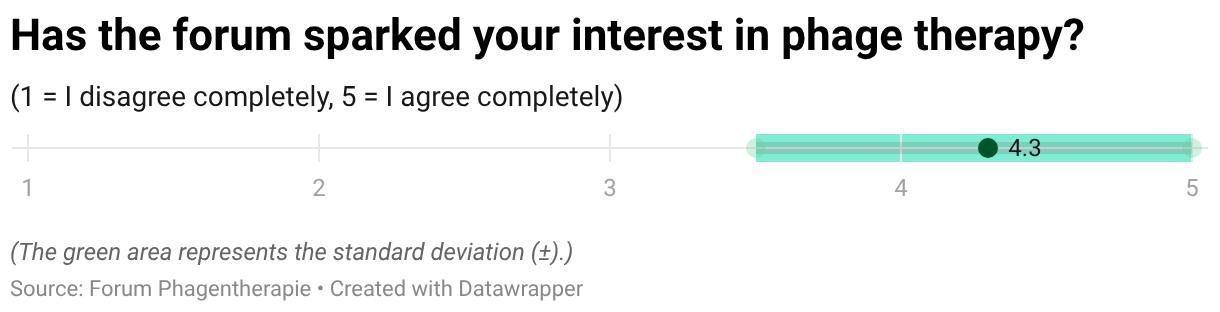
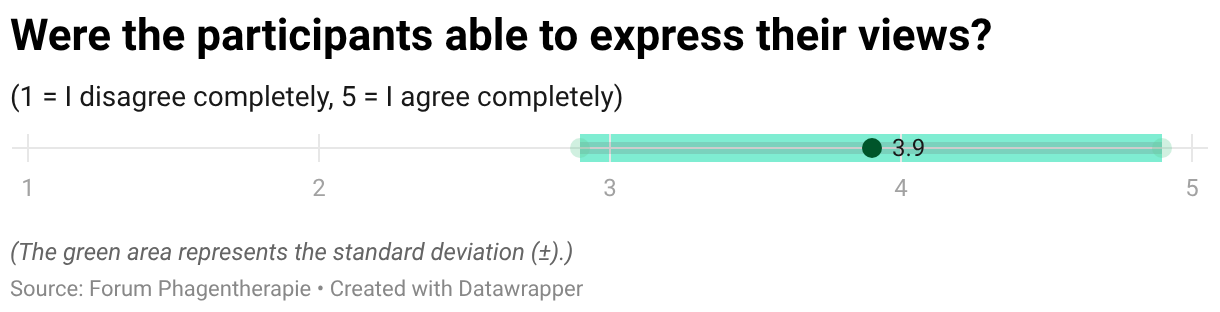
Participants tended to agree with the statements that the forum had increased their interest in phage therapy (M = 4.3) and that they had been able to contribute their views (M = 3.9). Following the forum in Basel, National Councillor Lohr said that he was ‘now three times more interested’ in the topic of phage therapy.
What next?
Measures proposed at the forums
-
- Improved cooperation between all stakeholders in Switzerland – including those not previously involved in the discussion, such as the Federal Office of Public Health.
- Establishment of one or two centres of excellence and a nationally coordinated action plan modelled on the approach taken for rare diseases, a contact point (or points) for healthcare professionals and patients, and a register for chronic, untreatable infections and phage therapies*.
- Financial support for a comprehensive ‘Phage Therapy Switzerland’ package (centres, GMP production at the CHUV, clinical trial, register, research). A national research programme could form the basis for this, funded by federal funds and additional resources from other stakeholders.
- A coordinated clinical trial involving all stakeholders and with the participation of Swissmedic from the outset of preparations.
- Information and awareness-raising amongst healthcare and political stakeholders to accelerate the process, clarify uncertainties regarding individual therapeutic trials and secure funding for the measures.
* The international ‘Phagistry’ initiative, coordinated by Balgrist University Hospital, could serve as a basis.
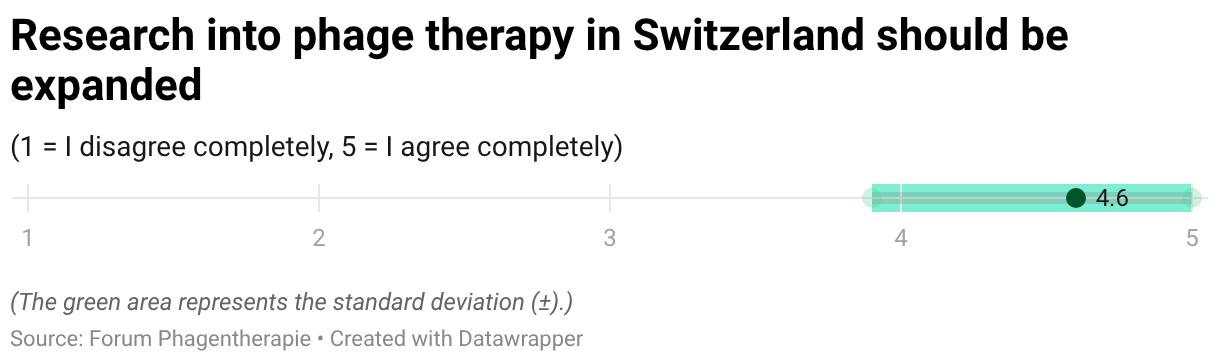
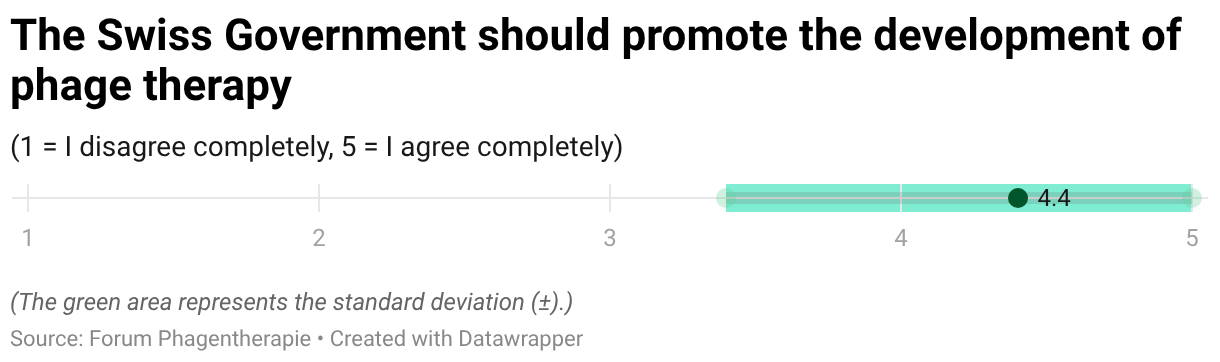
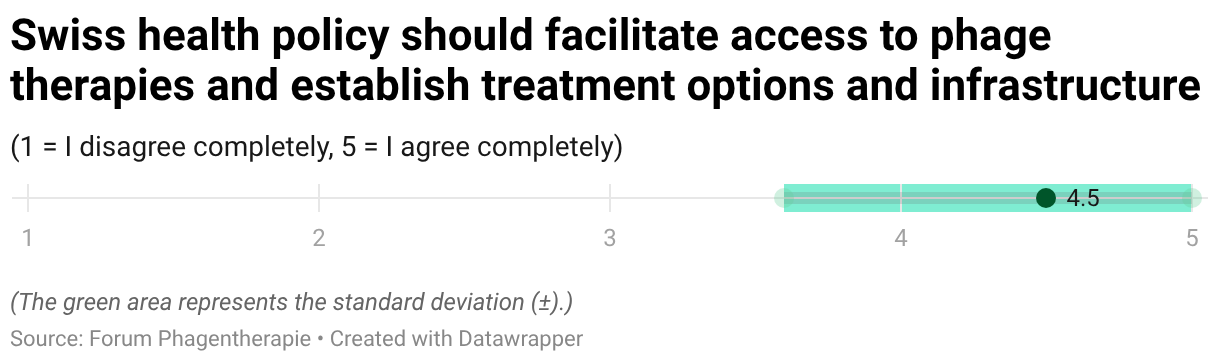
In the survey, respondents tended to favour the Swiss government promoting phage therapy and creating treatment options in three questions (average score of 4.4 to 4.6).